
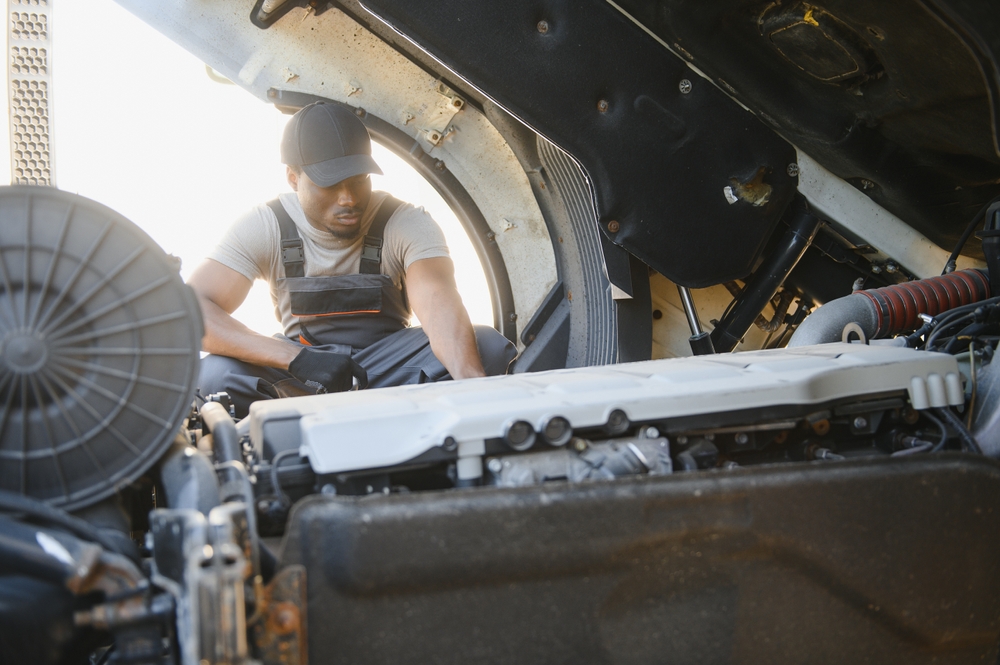
The trucking industry is the backbone of American commerce, and nowhere is that more evident than in Ocala, FL, a city strategically positioned along I-75 that serves as a critical hub for freight movement throughout the Southeast. As fleets grow larger and schedules grow tighter, the demand for faster, smarter, and more reliable semi truck repair has never been greater. Fortunately, the repair industry is keeping pace, driven by a wave of emerging technologies that are transforming how technicians diagnose, service, and maintain heavy-duty vehicles.
For fleet operators and independent owner-operators alike, understanding all these advancements can mean the difference between a minor delay and a costly breakdown.
1. Advanced Diagnostic Systems Are Redefining How Problems Get Found
Gone are the days when a technician had to rely solely on experience and intuition to track down a fault. Today, semi truck repair in Ocala, FL is increasingly powered by sophisticated onboard diagnostic systems that communicate directly with repair shop software. Modern Class 8 trucks are equipped with dozens of sensors monitoring everything from exhaust temperatures to transmission fluid pressure, and those sensors generate real-time data streams that trained technicians can interpret in minutes.
Electronic logging devices, originally mandated for hours-of-service compliance, now double as early warning systems. They flag irregularities before a small issue becomes a roadside emergency. Shops in Ocala, FL that have invested in the latest diagnostic interfaces can pull fault codes, review historical performance data, and cross-reference manufacturer databases all in a single workflow. This level of precision drastically reduces guesswork, shortens repair timelines, and lowers the overall cost of semi truck repairs in Ocala, FL.
Telematics platforms have added another layer to this diagnostic revolution. Fleet managers can monitor vehicle health remotely, receive push alerts when a parameter falls outside normal range, and schedule preventive maintenance before a breakdown occurs. For trucking operations running routes through Central Florida, this kind of proactive monitoring translates directly into fewer unplanned stops and more miles logged.
2. Predictive Maintenance Technology Is Cutting Downtime Dramatically
Reactive maintenance, which means fixing things after they break, has always been the more expensive approach. The shift toward predictive maintenance is one of the most significant developments in semi truck repair, and Ocala, FL shops at the forefront of this change are delivering measurable results for their customers.
Predictive maintenance uses data analytics and machine learning algorithms to assess wear patterns and forecast when a component is likely to fail. Rather than replacing parts on a fixed schedule or waiting for a failure event, technicians can intervene at the optimal moment, extending component life while preventing unexpected downtime. Sensors embedded in brake systems, tires, engines, and drivetrains feed continuous data into cloud-based platforms that flag anomalies and generate maintenance recommendations automatically.
For fleets operating out of or passing through Ocala, FL, the practical implications are significant. A truck that might have broken down on a remote stretch of highway can instead be routed to a repair facility at a scheduled time, with parts already ordered and labor allocated in advance. This kind of efficiency is transforming the economics of fleet management and raising the standard of semi truck repairs across the board.
Some of the most forward-thinking repair operations are now integrating predictive maintenance dashboards directly into their customer portals, giving fleet managers a live view of every vehicle’s health status. This transparency builds trust, improves communication, and allows for smarter dispatch decisions on the operational side.
3. Augmented Reality and Digital Tools Are Empowering Technicians
The complexity of modern semi trucks demands a new generation of technicians equipped with more than wrenches and experience. Augmented reality (AR) technology is beginning to make its way into heavy-duty repair shops, offering technicians step-by-step visual overlays that guide them through complex procedures in real time.
AR headsets and tablets can project wiring diagrams, torque specifications, and component schematics directly onto a technician’s field of view, reducing errors and speeding up repairs. For semi truck repair in Ocala, FL, where technicians may encounter a wide variety of makes and models given the region’s heavy freight traffic, this technology is especially valuable. Rather than pausing to consult a manual or contact a manufacturer’s support line, a technician equipped with AR tools can access the information they need without breaking workflow.
Digital repair management platforms are also streamlining back-end operations. Work orders, parts inventory, labor tracking, and customer communication are now handled through integrated software systems that eliminate paperwork and reduce administrative errors. When a fleet operator brings a truck in for semi truck repairs in Ocala, FL, they can receive digital updates throughout the repair process, including photos, estimated completion times, and itemized cost breakdowns, all accessible through a mobile app or web portal.
Training programs are evolving alongside these tools. Technical schools and manufacturer-sponsored programs are incorporating digital simulations and virtual reality modules to prepare the next generation of diesel mechanics for the technology-rich environments they will encounter on the shop floor.
4. Electric and Hybrid Truck Technology Is Reshaping Repair Expertise
The gradual introduction of electric and hybrid semi trucks into commercial fleets is already beginning to influence the repair landscape. While full electrification of long-haul trucking remains a work in progress, hybrid powertrains and electric refrigeration units are appearing with increasing frequency, and repair shops in Ocala, FL are adapting accordingly.
Servicing electric drivetrains requires specialized training, tools, and safety protocols that differ significantly from traditional diesel repair. High-voltage battery systems, regenerative braking components, and electric motor assemblies demand a different knowledge base, and the shops investing in that expertise today are positioning themselves as essential partners for fleets transitioning to cleaner technologies.
For semi truck repair in Ocala, FL, this shift also means keeping pace with software updates that govern vehicle performance. Electric and hybrid trucks are more software-dependent than their diesel counterparts, meaning that a firmware update or a calibration adjustment can be as important as a mechanical repair. Technicians who understand both the hardware and software dimensions of these vehicles are becoming increasingly valuable in the regional market.
The infrastructure side of this transition is also relevant for Ocala, FL. As charging stations expand along major freight corridors including I-75 and I-10, the region is becoming better equipped to support electric trucking operations, and local repair facilities are developing the capabilities to service vehicles that use this infrastructure.
5. Parts Innovation and Supply Chain Technology Are Speeding Up Repairs
Even the most skilled technician with the most advanced diagnostic tools cannot complete a repair without the right parts. Supply chain technology has emerged as a critical enabler of faster semi truck repairs in Ocala, FL, with digital parts platforms, predictive ordering systems, and regional distribution networks all contributing to reduced wait times.
Modern parts procurement software integrates with repair management systems to automatically identify compatible components, check regional inventory levels, and generate purchase orders in real time. When a truck arrives at a shop in Ocala, FL with a diagnosed fault, the parts needed for the repair can often be ordered and delivered within hours rather than days, thanks to the logistics networks that have built up around major freight corridors.
Remanufactured and aftermarket parts have also improved significantly in quality and availability. For fleet operators managing costs, access to high-quality remanufactured components through verified suppliers represents a meaningful savings opportunity without compromising reliability. Repair shops that have established strong supplier relationships are able to pass these advantages on to their customers.
3D printing technology is beginning to factor into parts availability as well. While not yet mainstream in heavy-duty truck repair, additive manufacturing is already being used to produce certain brackets, housings, and low-stress components on demand, which is particularly useful for older truck models where original parts may be discontinued or difficult to source.
Conclusion
The semi truck repair industry in Ocala, FL is undergoing a profound transformation, driven by technologies that improve accuracy, reduce downtime, and expand the capabilities of repair professionals. From advanced diagnostics and predictive maintenance to augmented reality tools and electric vehicle expertise, the shops embracing these innovations are better positioned to serve the evolving needs of modern fleets. For trucking operations that depend on reliability, partnering with a repair facility that stays current with emerging technology is not just a smart choice; it is an essential one.